
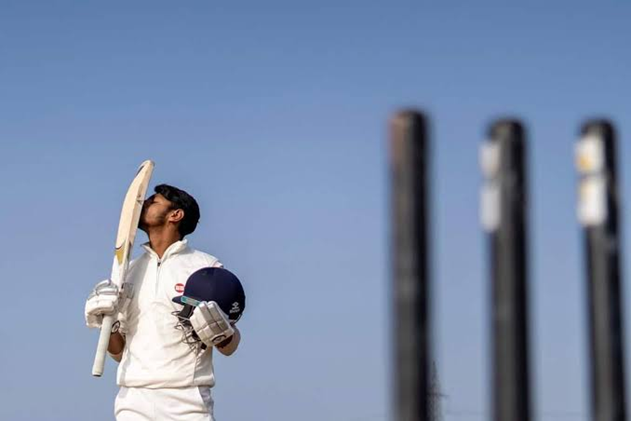
Cricket in India has long transcended simple sports viewership, functioning as a shared cultural language that connects millions across diverse demographics. Over the past decade, the transition from conventional television broadcasts to multi-screen mobile experiences has fundamentally altered how supporters interact with live matches. Followers no longer remain passive spectators waiting for over-end summaries; instead, they continuously track granular statistics, ball-by-ball probability shifts, and individual player performance metrics in real time.
This digital shift is driven by the widespread availability of high-speed mobile networks and lightweight web applications capable of handling high-concurrency data updates. Whether following domestic red-ball fixtures or fast-paced international short-format games, contemporary fans demand immediate access to tactical data. Understanding the underlying infrastructure and data dynamics behind these live platforms provides valuable insight into how modern sports media operates under extreme traffic demands.
The Mechanics of Live Match Tracking and In-Play Dynamics
Modern digital sports tracking relies on high-frequency data pipelines that convert field actions into structured visual feeds within milliseconds. During major tournaments, pitch-side data operators log every delivery—recording parameters such as pitch location, speed, shot direction, and fielder placement—which are instantly broadcast across global content delivery networks. This raw feed is processed by algorithmic models to re-calculate session projections, required run rates, and win probabilities dynamically.
The integration of sub-second statistical feeds into mobile interfaces has transformed how enthusiasts analyze match momentum during ongoing overs. When examining modern platform architecture, such as a desi indian cricket live betting app, the core value lies in how instantly updated odds, toss results, and inning totals reflect subtle tactical changes on the field—such as a key bowler being brought into the attack during a powerplay or shifting pitch behavior in long-format matches like the Ranji Trophy.
To ensure consistency across varying mobile network speeds, developers employ web-socket protocol channels rather than traditional HTTP polling. Web-sockets maintain an open, full-duplex communication channel between the client browser and the server, allowing updates to be pushed instantly whenever a run is scored or a wicket falls. This architectural framework minimizes payload sizes, reducing data consumption for mobile users while preserving real-time accuracy.
Key Technical Metrics That Define Quality In-Play Sports Platforms
Evaluating the reliability of a live sports analytics interface requires looking beyond surface-level design to inspect core technical capabilities. When thousands of concurrent sessions connect to a single match hub during critical overs, small infrastructure bottlenecks can lead to stalled feeds or outdated display metrics. Experienced digital content managers look for specific engineering benchmarks when assessing live sports delivery systems.
- Data Update Latency: The temporal delay between an actual boundary or dismissal and its visual rendering on screen, which ideally remains under two seconds to align with broadcast realities.
- Feed Synchronization: The ability of the interface to balance incoming play-by-ball data with secondary statistical overlays, ensuring odds and probability meters adjust without page reloads.
- Low-Bandwidth Optimization: Implementation of optimized JSON payloads and vector-based graphics to maintain stability on congested 4G or entry-level 5G cellular connections.
- Multi-Market Feed Coverage: Simultaneous processing of diverse match categories, ranging from international Test matches (such as Australia versus South Africa) to regional domestic leagues like the Sheffield Shield or Ranji Trophy.
Maintaining these operational standards requires continuous server-side load balancing, preventing regional server spikes from causing localized downtime during high-profile powerplay overs.
Domestic Cricket vs. Short-Format Analytics: Different Analytical Paradigms
The analytical requirements of cricket fans vary significantly depending on the format being covered. Multi-day first-class matches, such as Ranji Trophy fixtures between teams like Karnataka, Saurashtra, Punjab, or Kerala, demand a longitudinal analytical approach. Readers tracking red-ball cricket evaluate session-by-session run rates, bowler workload distribution, pitch deterioration over days, and second-innings lead calculations. Data interfaces for these matches prioritize stability and historical context over rapid, volatile odds adjustments.
Conversely, limited-overs T20 fixtures and fast-paced virtual cricket simulations rely on high-frequency, short-term statistical volatility. In these formats, a single dot ball or a missed catch dramatically alters the required run rate and projected total within seconds. Virtual formats and simulated short-over matches utilize random number generators (RNG) coupled with historical player data to render rapid-fire outcomes, requiring interfaces to update state variables instantly after every simulated delivery.
| Format Type | Primary Analytical Focus | Data Refresh Frequency | Key Tactical Variables |
|---|---|---|---|
| First-Class / Red-Ball | Session trends & pitch wear | Periodic (per over / session) | Bowler economy, pitch degradation, session run rate |
| Short-Format (T20 / ODI) | Required run rate & powerplays | High-frequency (ball-by-ball) | Boundary percentage, dot-ball ratio, matchup stats |
| Virtual / Simulated Games | Algorithmic RNG & historical data | Real-time / instant | Probability distribution, simulated conditions |
Understanding these distinctions helps platform architects structure user interfaces that display relevant metrics prominently without cluttering the screen with unnecessary short-term fluctuations during multi-day matches.
Mitigating Technical Friction During Peak Traffic Events
During major sporting events, traffic spikes can increase request volumes by orders of magnitude within minutes. A single key wicket in an international fixture can cause hundreds of thousands of users to refresh match pages simultaneously. Platform resilience depends on automated scaling strategies, such as serverless edge computing and dynamic caching layers, which store static assets close to the end user while dynamically streaming only the updated data variables.
From a user perspective, evaluating platform performance during high-demand windows involves verifying stream synchronicity against live commentary and checking whether market suspensions during key decision reviews resolve smoothly. Redundant data pipelines ensure that if a primary sports data provider experiences a temporary outage, secondary feeds seamlessly take over without interrupting the user’s active session.
Real-Time Data Literacy and the Future of Interactive Sports Culture
The evolution of modern sports media reflects a broader transformation in digital content consumption, where fans actively seek data-driven clarity rather than simple passive narrative summaries. Modern cricket enthusiasts analyze boundary percentages, bowling economy under pressure, and live session trends with the precision of professional commentators. As mobile interfaces continue to refine sub-second data streaming and adaptive layouts, the bridge between live stadium action and remote fan engagement grows increasingly seamless, establishing real-time data literacy as a central pillar of contemporary Indian sports culture.